
Australia is introducing a significant update to child car seat safety laws that will take effect from March 1, 2025. The change imposes a $550 on-the-spot fine for caregivers who fail to install child car seats correctly. Designed to reduce child injuries and fatalities on Australian roads, the updated regulation tightens enforcement around car seat usage and prioritises correct installation techniques, not just seat purchase.
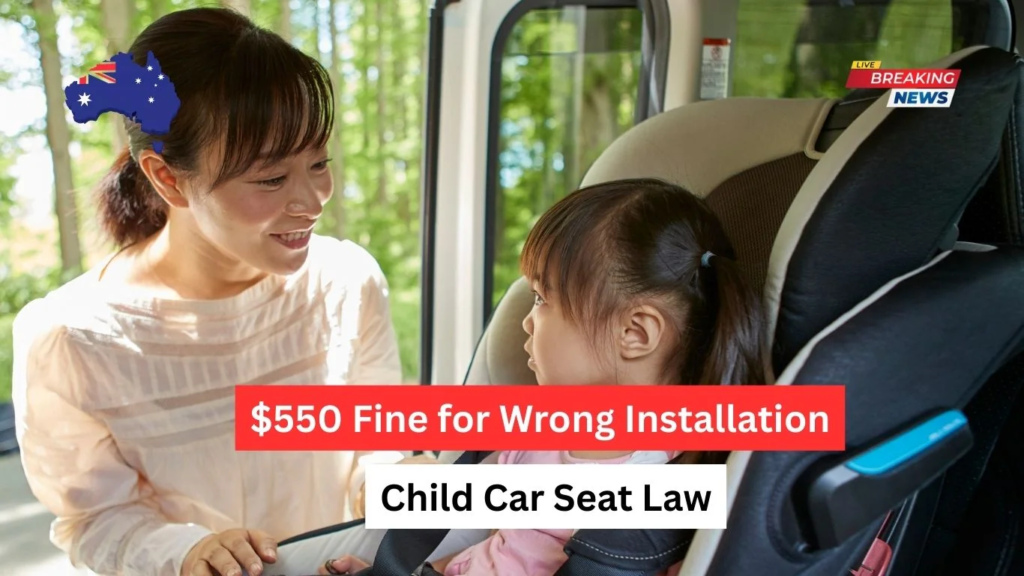
This new law applies nationwide and represents one of the most comprehensive efforts to strengthen child passenger safety in recent years. It emphasises that the safest child car seat is one that is fitted correctly, within the relevant height and weight standards, and appropriate for the child’s age.
What the New Child Car Seat Law Requires
Under the updated 2025 legislation, drivers and caregivers transporting children must ensure that:
- The child car seat is suitable for the child’s age, height, and weight category.
- The seat is installed according to the manufacturer’s specifications, including secure attachment to the vehicle’s anchor points.
- The harness is appropriately adjusted to fit the child snugly.
- The correct restraint type is used for each developmental stage, from infant to booster seats.
The law targets the installation process specifically rather than the mere possession of a car seat. Police and authorised road safety officers have the power to issue on-the-spot infringement notices if a seat is observed to be incorrectly fitted.
Why Correct Installation Matters
Road safety data shows that child restraints significantly reduce the risk of serious injury and death when used correctly. However, incorrect installation or improper harness adjustments can compromise the protective benefits of high-quality seats.
A seat that moves more than an inch at its anchor points, has twisted or loose harness straps, or is not compatible with the child’s size can fail to protect effectively in a collision or sudden stop. By focusing on installation accuracy, the new regulation aims to ensure that every component of the safety system performs as intended.
Research has repeatedly shown that while many caregivers invest in quality restraints, a significant number do not secure them properly. The updated law seeks to close this gap between ownership and effective usage.
Who Is Affected by the Law
The new regulation applies to all drivers and adults responsible for transporting children under 16 years of age. This includes parents, guardians, family members, carers, taxi and rideshare drivers, and other authorised transport providers.
Notably, liability for ensuring correct installation rests with the driver or responsible adult in control of the vehicle at the time of inspection. Even if someone else installed the car seat, the driver can be fined if it is found to be incorrectly fitted while transporting a child.
How Enforcement Will Work
From March 1, 2025, authorised law enforcement officers can conduct roadside checks and inspections to assess whether child car seats are installed properly. Officers will look for specific issues such as:
- Incorrect attachment to the vehicle’s seat anchor points
- Loose or improperly threaded harness straps
- Incompatible restraint systems for the child’s size
- Absence of required restraint items for the child’s age bracket
If officers determine that any installation errors are present, they may issue an infringement notice on the spot, carrying a penalty of $550.
However, authorities are expected to focus on education and awareness during the early weeks of the new rule’s implementation. Initial enforcement may include warnings combined with guidance on proper installation techniques, though the legal power to fine exists from day one.
Exemptions and Special Cases
The regulation includes certain exemptions that reflect practical considerations and safety priorities. These may include:
- Emergency situations where the child’s safety is prioritised above restraint use
- Medical exemptions with appropriate documentation
- Specific vehicle designs that cannot accommodate standard seat installations (with proof)
It is important for caregivers to familiarise themselves with the full list of exemptions as published by state and territory road safety authorities to avoid confusion and unintended fines.
How to Install Child Car Seats Correctly
To comply with the new law and maximise child safety, caregivers should take the following steps:
- Read the Manufacturer’s Manual: Every car seat model has unique installation requirements. Follow the manual’s instructions for securing the seat to the vehicle and adjusting harnesses.
- Check Compatibility: Ensure the car seat is compatible with the vehicle’s anchor points, seat belts, and ISOFIX or LATCH connectors.
- Adjust Harness Snugness: Straps should be tight enough that you cannot pinch excess webbing at the shoulder.
- Confirm Correct Orientation: Rear-facing seats are recommended for infants and toddlers until they reach the maximum size limit specified by the manufacturer.
- Seek Professional Assistance: Many fire stations, community organisations and road safety groups offer free or low-cost professional fitting checks.
Regularly revisiting installation — especially after moving the seat between vehicles or adjusting harnesses — is essential to ongoing compliance and child safety.
Expected Impact of the Law
Road safety advocates and medical professionals widely support the updated rule, highlighting its potential to reduce injuries among child passengers. Data consistently shows that correct restraint use decreases the severity of injuries sustained in collisions, making proper installation a life-saving measure.
Officials expect the legislation to increase awareness about appropriate car seat use and prompt caregivers to seek installation advice or professional checks. Over time, this could lead to measurable declines in child injuries linked to poor restraint use.
Preparing for the New Rule
Caregivers are encouraged to prepare before March 1, 2025. Steps to take now include:
- Reviewing current installations and making adjustments as needed
- Booking professional fitting sessions if unsure about correct setup
- Familiarising themselves with local road authority guidelines and exemptions
- Updating car seats to models that best fit the child’s growth stage
By taking proactive steps, families can ensure compliance, avoid fines, and — most importantly — protect their children on the road.
Conclusion
Australia’s new child car seat law represents a significant step forward in road safety policy. By placing legal emphasis on correct installation, rather than simply having a restraint present, authorities aim to reduce preventable injuries and save lives.
From March 1, 2025, caregivers who transport children must ensure seats are fitted properly or face a $550 fine. The change applies nationwide and affects all drivers and responsible adults transporting children under 16.
With proper preparation and adherence to installation guidelines, families can comply with the law while providing the highest level of protection for child passengers. The focus is clear: the safest child car seat is one that is installed correctly.