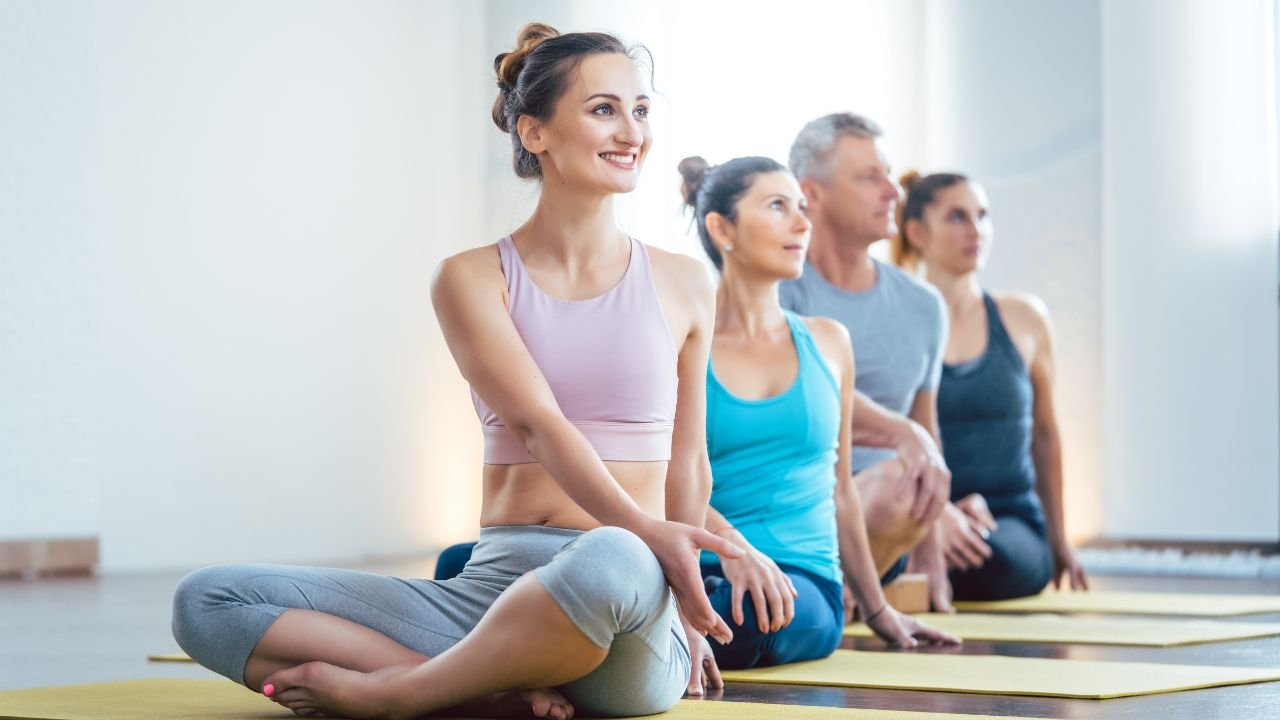
Building a sustainable yoga routine starts with mastering the fundamentals. Foundational poses teach proper alignment, strengthen major muscle groups, and develop body awareness. Whether you are new to yoga or refining your technique, these eight essential postures create a strong base for long-term progress and injury prevention.
1. Mountain Pose (Tadasana)
Mountain Pose may look simple, but it forms the blueprint for all standing postures.
Why it matters:
It teaches proper posture, grounding through the feet, and core engagement. Good alignment in Tadasana improves balance and reduces strain in more complex poses.
Key cues:
Stand tall with feet hip-width apart. Distribute weight evenly across both feet. Lift the chest, relax the shoulders, and engage the thighs gently.
2. Downward-Facing Dog (Adho Mukha Svanasana)
This foundational pose appears in many yoga sequences.
Why it matters:
It strengthens the shoulders and arms while stretching the hamstrings and calves. It also improves circulation and builds endurance.
Key cues:
Press firmly through the palms, lift the hips high, and lengthen the spine. Keep a slight bend in the knees if hamstrings feel tight.
3. Plank Pose (Phalakasana)
Plank is essential for developing core stability.
Why it matters:
A strong core supports nearly every yoga posture and protects the lower back. Plank also builds shoulder and arm strength.
Key cues:
Keep wrists under shoulders. Draw the belly inward and maintain a straight line from head to heels.
4. Warrior I (Virabhadrasana I)
Warrior I builds strength and focus.
Why it matters:
It strengthens the legs, opens the hips, and improves stability. The upright posture also enhances balance and coordination.
Key cues:
Bend the front knee deeply, keep hips squared forward, and reach arms overhead without shrugging the shoulders.
5. Warrior II (Virabhadrasana II)
Warrior II develops stamina and lower-body power.
Why it matters:
It strengthens thighs and glutes while improving concentration and balance.
Key cues:
Keep the front knee aligned over the ankle. Extend arms firmly and gaze over the front fingertips.
6. Tree Pose (Vrksasana)
Tree Pose enhances balance and mental focus.
Why it matters:
Balancing postures improve coordination, strengthen stabilizing muscles, and build confidence in your practice.
Key cues:
Place one foot on the inner calf or thigh of the standing leg. Keep hips level and bring palms together at the chest or overhead.
7. Bridge Pose (Setu Bandha Sarvangasana)
Bridge Pose strengthens the back body.
Why it matters:
It activates the glutes and hamstrings while gently opening the chest and hip flexors. This counteracts long hours of sitting.
Key cues:
Press into the feet, lift hips upward, and keep knees hip-width apart.
8. Child’s Pose (Balasana)
Child’s Pose is a restorative foundation.
Why it matters:
It provides rest between challenging poses and encourages mindful breathing. A strong practice includes recovery as much as effort.
Key cues:
Kneel on the mat, sit back on the heels, and fold forward. Rest the forehead on the mat and breathe deeply.
Building Strength Through Consistency
These eight foundational yoga poses create a balanced routine that improves flexibility, strength, posture, and body awareness. Practicing them regularly builds a stable base for advanced postures and more dynamic sequences.
Focus on slow, controlled breathing and precise alignment rather than rushing through movements. A strong yoga practice is not about complexity; it is about mastering the basics with attention and consistency.