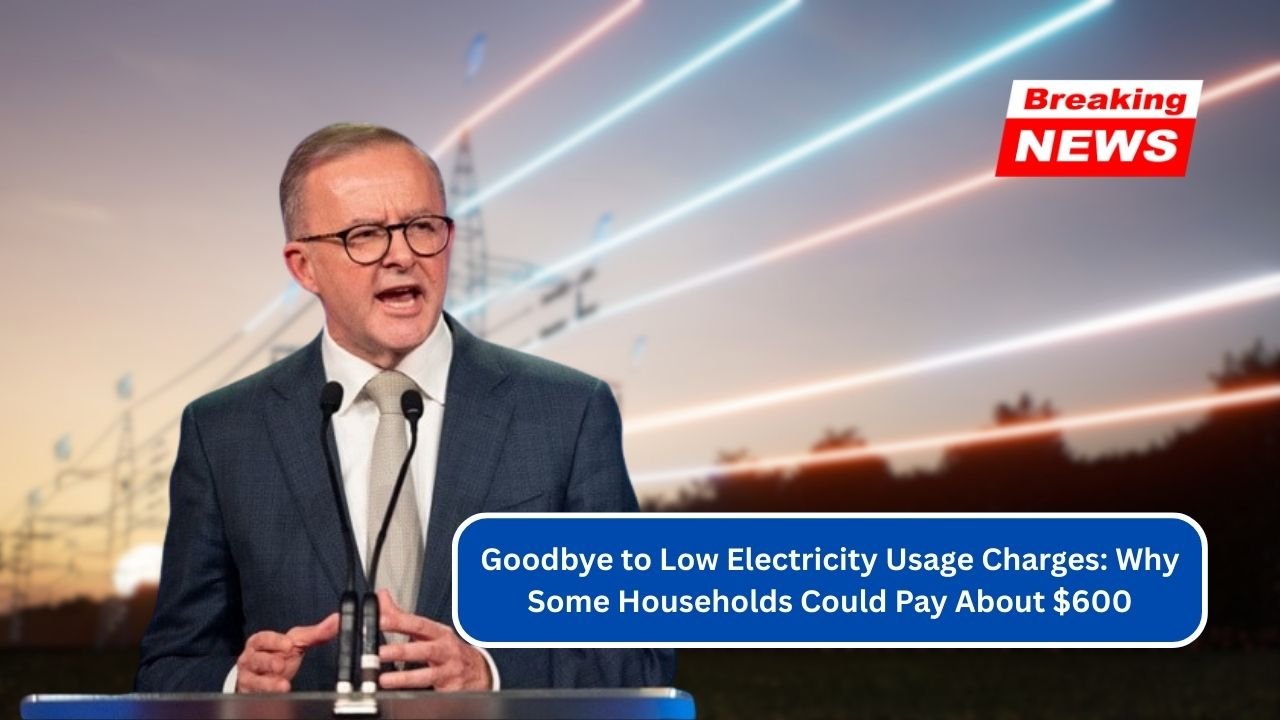
Australian households have entered 2026 with a wave of confusion about electricity bills, fuelled largely by social posts claiming that “new rates from 20 February 2026” will add hundreds of dollars a year. The message has gained traction because many people are already noticing larger bills, but the idea of a single nationwide tariff change on that date is not accurate. What is happening instead is a more complex combination of expiring bill support, shifting tariff structures, and ongoing policy reforms that influence how electricity providers recover their costs. These forces are shaping bills in ways that particularly affect low-usage customers.
Why bills are rising even without a national 20 February change
There is no uniform rule across Australia that resets electricity prices on 20 February 2026. Retail electricity plans continue to vary by state, distributor network, retailer, and plan type. However, a broader transformation in pricing is underway: market bodies and networks are rebalancing the relationship between fixed and usage charges. At the same time, many households have lost federal quarterly bill credits that previously reduced their total payable amount. When those credits disappear from early-2026 bills, the increase can look sudden, even if the household’s underlying usage has not changed.
This is exactly why the “20 February 2026” narrative spread so quickly. It appeared at a moment when many people were confronting higher charges for reasons unrelated to a specific national rule. Instead of one policy change, it is the collision of several structural and timing-based factors.
Why low-usage customers feel the impact most sharply
Electricity bills consist of two major elements: the fixed daily supply charge and the usage rate measured in cents per kilowatt-hour. Households that keep consumption extremely low generally benefit from plans in which a larger share of the cost is tied to usage. When networks increase fixed charges, the cost burden shifts toward households that consume less. This reduces the financial advantage of being energy efficient and can leave small households, apartment residents, and single-occupant homes paying more even when their usage stays steady.
Energy analysts and consumer advocacy submissions have openly warned in 2026 that this shift risks eroding the incentive to reduce consumption. If fixed charges continue to rise, low-usage customers may see their annual costs increase faster than those of higher-usage homes.
Why the date “20 February 2026” keeps appearing
The date itself appears in a range of energy-policy contexts, but not as a market-wide retail tariff deadline. One prominent example is a New South Wales energy policy consultation with submissions closing on 20 February 2026. Because this consultation relates broadly to pricing and scheme reform, it has been frequently referenced by commentators and news pages, which helps explain why the date is circulating widely online. However, it does not represent an automatic tariff change for all customers in NSW or across Australia.
The confusion has grown because households are simultaneously losing bill credits and encountering other plan-level adjustments. The result is a timing coincidence that makes February 2026 feel like a singular turning point when, structurally, it is not.
Understanding the “$600 a year” figure
Reports of annual increases of around $600 usually come from specific circumstances rather than a universal shift. Several situations can produce a jump of that scale:
• Rising fixed supply charges, which distribute more of the system cost across all customers
• Expired discounts or benefits, pushing customers onto higher default rates
• Removal of federal or state bill credits, which artificially raised the previous bill’s reduction
• Being on a plan suited for higher consumption, despite being a low-usage household
These factors vary widely between states and retailer zones, which is why viral posts often use “up to $600” figures rather than clear examples. The number is best viewed as a possible outcome, not a guaranteed one.
The longer reform timeline behind today’s pressures
Australia’s electricity system is undergoing a staged redesign. Work by the Australian Energy Market Commission and other bodies is examining tariff models that better reflect the cost of maintaining the grid and the timing of power usage. These reforms are expected to unfold gradually from 2026 onward, not through a single-day switchover.
Consumer groups have urged policymakers to avoid placing too much cost into fixed charges, arguing that doing so undermines equity and penalises efficient households. This debate will continue through 2026 as networks and retailers prepare their long-term tariff structures.
How low-usage households can protect themselves now
While reform debates continue, low-usage customers can still take practical steps to control costs:
1. Prioritise the lowest daily supply charge
For low-usage homes, the fixed daily charge often matters more than the cents-per-kWh rate. A slightly higher usage rate can still result in a lower overall bill if the fixed charge is minimal.
2. Check when discounts or benefits expire
A significant portion of bill shock comes from offers ending without the customer realising. Review your plan’s conditions and switch promptly if benefits have lapsed.
3. Use the government comparison tool
Australia’s authorised energy comparison site allows users to filter plans based on their true usage profile, helping low-usage households avoid unsuitable plans.
4. Shift discretionary usage to cheaper periods
Where time-of-use tariffs apply, using appliances during solar-rich daytime hours or designated off-peak periods can still lower costs, even in a higher fixed-charge environment.
5. Contact your retailer early if you are struggling
Hardship programs exist to support customers facing financial difficulty. Reaching out early often results in more flexible arrangements.
The bottom line
Australia is not experiencing a single mandated national price rise tied to 20 February 2026. Instead, households are encountering the combined effect of disappearing bill credits, higher fixed charges in some network areas, and ongoing electricity pricing reforms. Low-usage customers feel these pressures most because the shifting balance between fixed and variable charges reduces the savings they typically secure through low consumption. By reviewing plans, monitoring fixed charges, and making deliberate usage choices, households can still maintain control over their electricity spending in 2026.