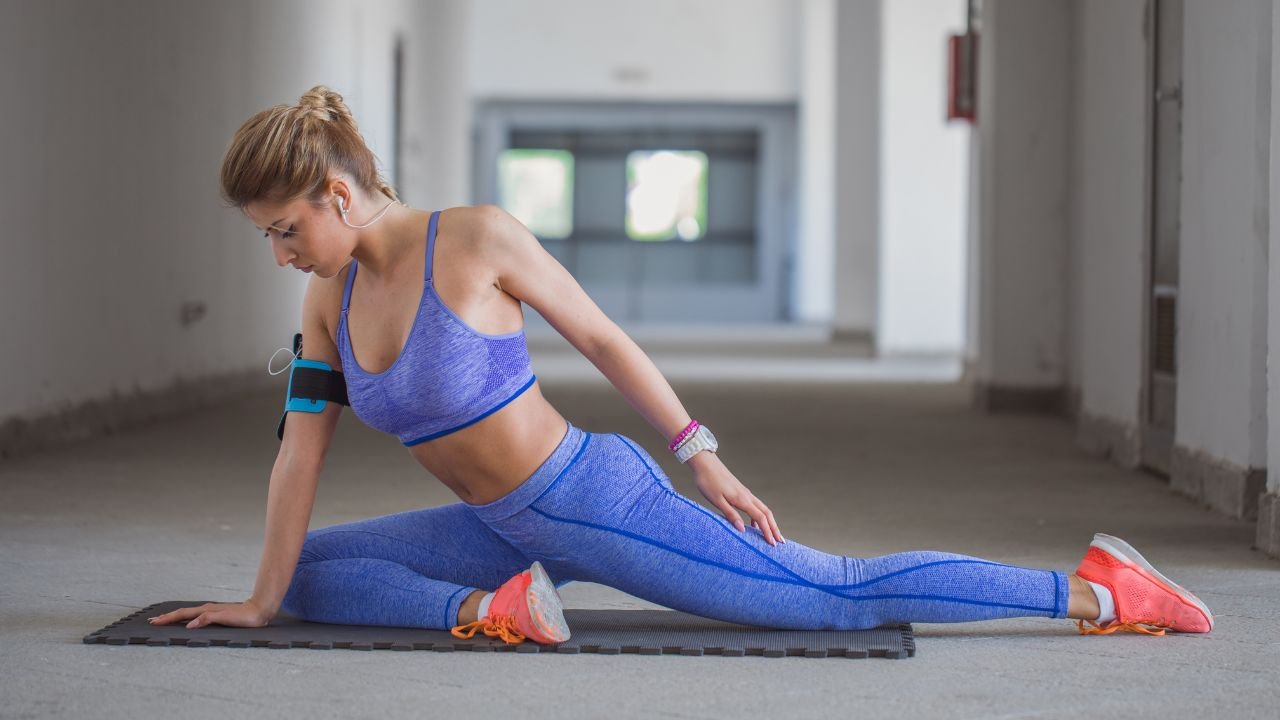
Strong, mobile hips are essential for speed, power, balance, and injury prevention. Whether you run, lift weights, cycle, or play field sports, limited hip mobility can reduce stride length, restrict squat depth, and overload the lower back and knees. The hips are the body’s primary force-transfer center, connecting the upper and lower body. When they move efficiently, athletic performance improves naturally.
These three yoga poses target hip flexors, glutes, adductors, and deep rotators while also strengthening stabilizing muscles. Together, they enhance range of motion, joint control, and movement efficiency.
1. Low Lunge (Anjaneyasana)
Low Lunge is one of the most effective poses for improving hip extension, which is crucial for sprinting, jumping, and powerful strides. Many athletes develop tight hip flexors from sitting, cycling, or repetitive forward motion. Restricted hip flexors limit explosive performance and may contribute to lower-back strain.
How it improves performance
- Increases hip extension for longer, stronger strides
- Reduces anterior pelvic tilt
- Activates glutes for better force production
How to practice
Step one foot forward into a lunge with the back knee on the floor. Gently tuck the pelvis (posterior tilt) to intensify the stretch in the front of the back hip. Keep the torso upright and core engaged. Hold for 30–45 seconds per side.
Performance tip: Focus on squeezing the back glute while maintaining pelvic control. This turns the pose into an active mobility drill rather than a passive stretch.
2. Pigeon Pose (Eka Pada Rajakapotasana)
Pigeon Pose targets the external rotators and glute complex. Athletes often have limited hip rotation, which affects cutting movements, lateral agility, and squat mechanics. Tight outer hips can also increase knee stress.
How it improves performance
- Enhances hip rotation and lateral mobility
- Reduces tension in piriformis and glutes
- Supports deeper squats and smoother directional changes
How to practice
From all fours, bring one knee forward toward the wrist and extend the opposite leg straight back. Keep hips squared as much as possible. Stay upright or fold forward slightly while maintaining steady breathing. Hold 30–60 seconds per side.
Performance tip: Keep the front foot flexed to protect the knee and maintain muscular engagement rather than collapsing into the joint.
3. Garland Pose (Malasana)
Garland Pose, a deep yogic squat, directly improves hip flexion, ankle mobility, and pelvic positioning. It mimics fundamental athletic positions used in lifting, jumping, and change-of-direction sports.
How it improves performance
- Increases squat depth and hip mobility
- Strengthens stabilizing muscles around hips
- Enhances lower-body mechanics
How to practice
Stand with feet slightly wider than hip-width apart. Lower into a deep squat with heels grounded if possible. Bring palms together at the chest and gently press elbows into knees to open the hips. Hold for 30–60 seconds.
Performance tip: Keep the chest lifted and spine long. If heels lift, place a folded towel underneath for support.
Why These Three Work Together
Athletic performance depends on three major hip actions:
- Extension (power and speed)
- Rotation (agility and joint protection)
- Flexion (strength and depth control)
Low Lunge improves extension.
Pigeon enhances rotation.
Garland builds flexion and control.
This combination supports explosive movement, stability, and injury prevention without overloading the joints.
Simple 8-Minute Athletic Hip Routine
Low Lunge – 45 seconds per side
Pigeon Pose – 45 seconds per side
Garland Pose – 1 minute
Repeat once
Perform after workouts or on recovery days for best results.
Key Takeaways
- Mobile hips increase stride power, squat depth, and agility.
- Active engagement during yoga improves athletic carryover.
- Tight hips can limit performance and raise injury risk.
- Short, consistent mobility sessions outperform occasional long stretches.
Adding these three yoga poses to your weekly training plan can enhance hip mobility, improve athletic mechanics, and support long-term joint health.